
Dents and bumper damage, assessed honestly
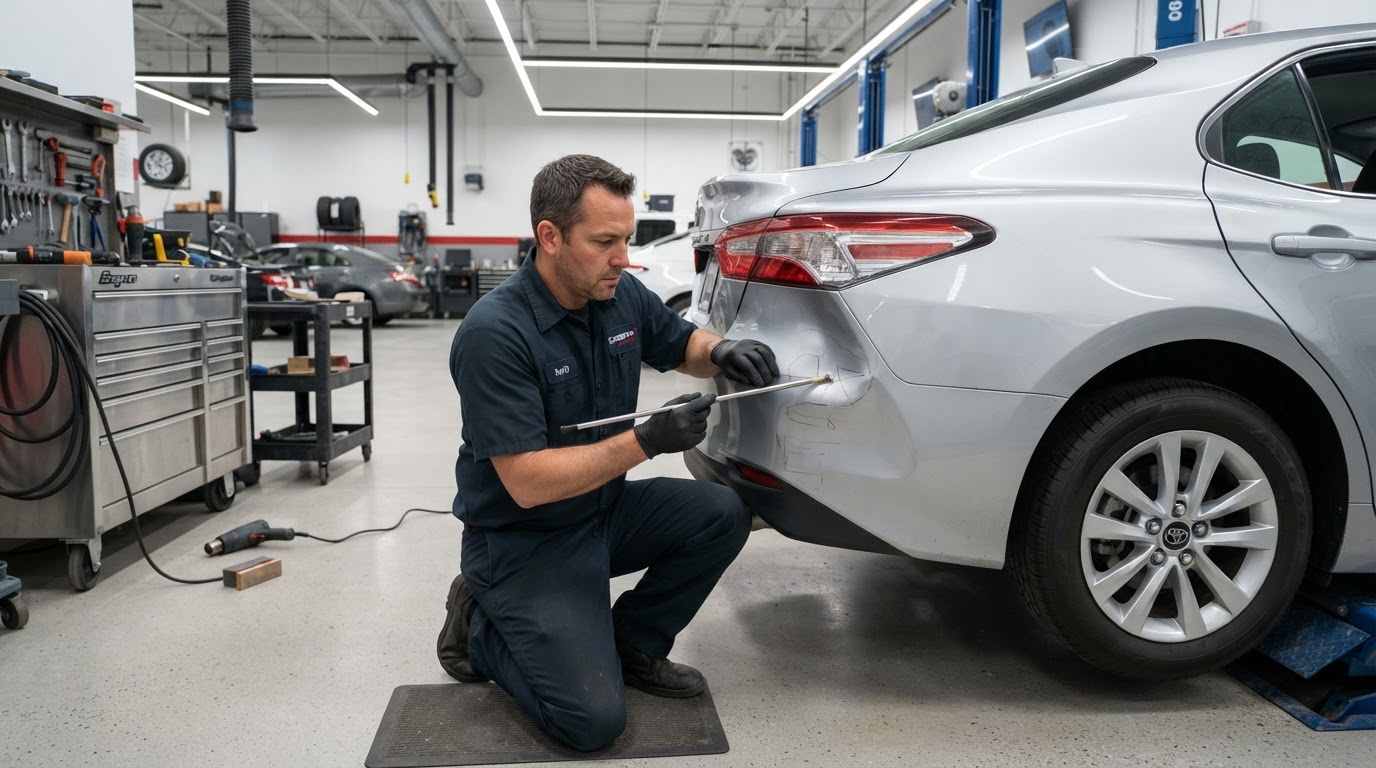
Not every dent needs a new panel, and not every damaged bumper can be safely repaired. We inspect the damage, check the material and mounting points, and recommend the option that restores strength and appearance at a fair cost. Our dent and bumper repair process starts with a hands-on assessment — not a guess from across the parking lot. We look at the depth, location, and characteristics of the damage, then explain whether repair or replacement is the better path. For shallow, round dents where the paint is intact, paintless dent removal is often the fastest and most affordable option. For deeper damage, conventional bodywork may be necessary. On bumper covers, we check whether the crack can be plastic-welded or whether the mounting tabs are compromised, which usually means replacement is the safer call.
Paintless dent removal (PDR)
For dents where the paint is intact, paintless dent removal massages the metal back to shape from behind the panel. It preserves the factory finish, takes less time than conventional repair, and avoids filler and repainting. PDR works best on shallow, round dents in the middle of a panel — the kind caused by a shopping cart, a door ding, or a small hailstone. It does not work on creases that cross a body line, dents at panel edges, or dents where the paint has cracked or stretched. An assessment determines whether PDR is right for your dent. When it is, the cost is typically lower and the turnaround faster than conventional collision and auto body repair. When it is not, we explain why and recommend the appropriate alternative.
Bumper repair and refinishing
Modern bumpers are plastic and can often be repaired, textured and refinished instead of replaced. A cracked bumper cover may be plastic-welded or repaired with flexible filler, depending on the location and extent of the crack. When replacement is the safer choice — for example, when mounting tabs are cracked or the cover is structurally deformed — we fit and align the new bumper cover and match the paint to the rest of the vehicle using automotive painting and color matching. We also check the components behind the cover: the absorber, reinforcement bar, and mounting brackets. A cover that looks repairable on the outside can conceal a crushed absorber that will not protect you in a future collision. That is why a bumper assessment includes both the visible surface and the hidden structure.
When replacement is the right call
Cracked mounting tabs, sensor damage, or structural deformation can make repair unsafe. In those cases we recommend replacement and explain exactly why, with photos of what we found. The goal is never to upsell — it is to restore the bumper's function so it performs the way the manufacturer designed it to. A bumper that has been patched when it should have been replaced may look fine but will not absorb energy correctly in the next impact. If panel alignment and damaged parts replacement is needed alongside the bumper work, we coordinate both in the same repair plan so the vehicle leaves with consistent fit and finish.
Sensor and electronics checks after a low-speed impact
Modern vehicles are equipped with parking sensors, backup cameras, and blind-spot monitors mounted in or behind the bumper covers. A low-speed impact that seems cosmetic can knock a sensor out of position, crack a camera lens, or damage a wiring harness — all without visible exterior damage. The result is a dashboard warning light, a sensor that no longer detects objects, or a safety system that does not function when you need it. A proper bumper assessment includes a functional check of the sensors and electronics, not just a visual inspection of the cover. If your dashboard shows a warning after an impact, do not ignore it — the sensor system may need recalibration or replacement.
How to prepare for a dent or bumper assessment
Bring the vehicle in for a hands-on inspection. Take photos of the damage before you arrive, and note when and how it happened. If the damage is from a collision, bring your insurance claim number if you plan to file. Remove personal belongings from the vehicle. The assessment takes a short time, and there is no obligation to proceed with the repair. We document the damage, explain the recommended approach, and give you a written estimate so you can make an informed decision. To schedule an assessment, visit our contact page.
Frequently Asked Questions
How long does dent & bumper repair take?
It depends on the extent of the damage and parts availability. We give you a time estimate with your written estimate and keep you updated if anything changes.
Do you work with insurance?
Yes. We prepare written estimates and photo documentation you can share with your adjuster, and you always have the right to choose your repair shop.
Can I get an estimate before committing?
Absolutely. Every repair starts with a thorough inspection and a written estimate — no obligation, no pressure.
Will the repair be visible?
Our goal is an invisible repair: matched paint, blended transitions and even panel gaps. We inspect the work with you before pickup.
Where are you located?
We're at 2201 SW 58th Terrace, West Park, FL 33023, with on-site parking for customers.
Do you service my make of vehicle?
We service most domestic and import makes. Check our Vehicles We Service & Repair section on the homepage, or contact us to confirm.
What should I bring to my assessment?
Bring your vehicle, photos of the damage if you have them, and your insurance claim number if you plan to file. The assessment is no-obligation.
Can I drive my car after the damage?
Only if it is safe to do so. If the vehicle pulls, leaks fluid, shows warning lights, or sits unevenly, arrange a tow instead of driving it.
Helpful Resources
Bumper Repair or Replacement: How We Decide
The inspection points that determine whether a damaged bumper can be safely repaired or should be replaced.
Understanding Dent and Bumper Damage
Why some dents pop out cleanly and others mean hidden damage — a plain-language guide to what you are looking at.
What to Expect From Dent and Bumper Repair
Timelines, process steps and finish quality — what a proper dent and bumper repair looks like from drop-off to pickup.
Dent & Bumper Repair Mistakes That Make Things Worse
From DIY dent kits to ignoring hidden bumper damage — the common mistakes that turn a simple dent into an expensive repair.
Request This Service
Cannan Family Collision — 2201 SW 58th Terrace, West Park, FL 33023
Request Assessment Get Directions