
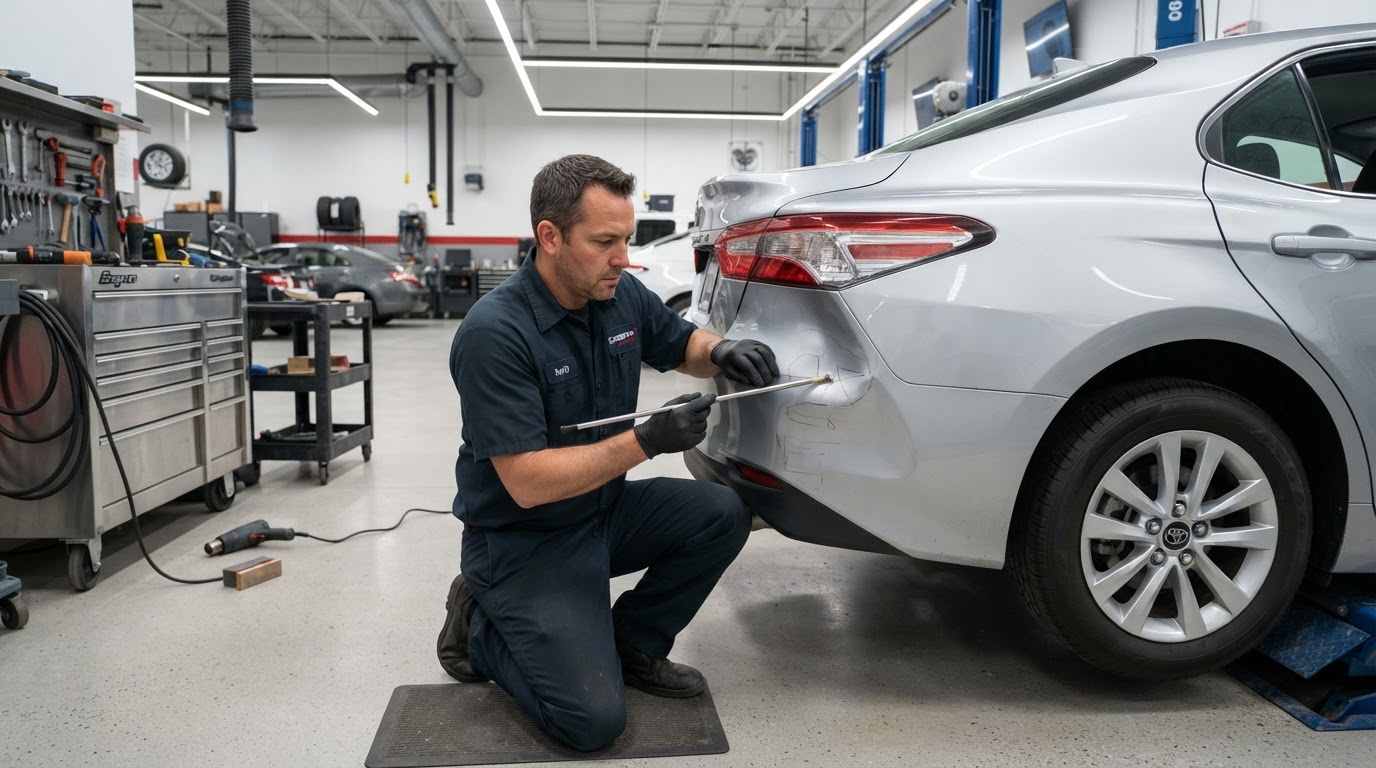
Material first
Most modern bumper covers are plastic — polypropylene, TPO or polyurethane — and each repairs differently. Some plastics can be welded and reshaped; others crack under stress. Identifying the material is the first step in any honest recommendation.
Damage depth and location
A scuff or shallow crack away from mounting points is usually repairable. Damage at a bracket tab, sensor pocket or the edge of the cover often compromises fit and should be replaced. Cracks that flex when the bumper is pressed are a warning sign.
What is behind the cover
The bumper cover is only the visible part. Behind it sit absorbers, reinforcement bars, sensors and brackets. If any of those are damaged, the cover repair alone will not restore the bumper's ability to do its job in a future impact.
Repair methods we use
Repairable covers are cleaned, plastic-welded or filled with flexible repair material, sanded, primed and refinished to match. The repair must flex with the bumper — a rigid filler on a flexible part will crack again.
When replacement is the right call
Torn mounting tabs, sensor damage, deep structural cracks or previous bad repairs usually make replacement safer and more economical than another repair. We explain the choice with photos so you can see exactly why.
Need dent & bumper repair in West Park?
Cannan Family Collision inspects, documents and repairs — with a written estimate you can share with your insurer.