
Types of dents
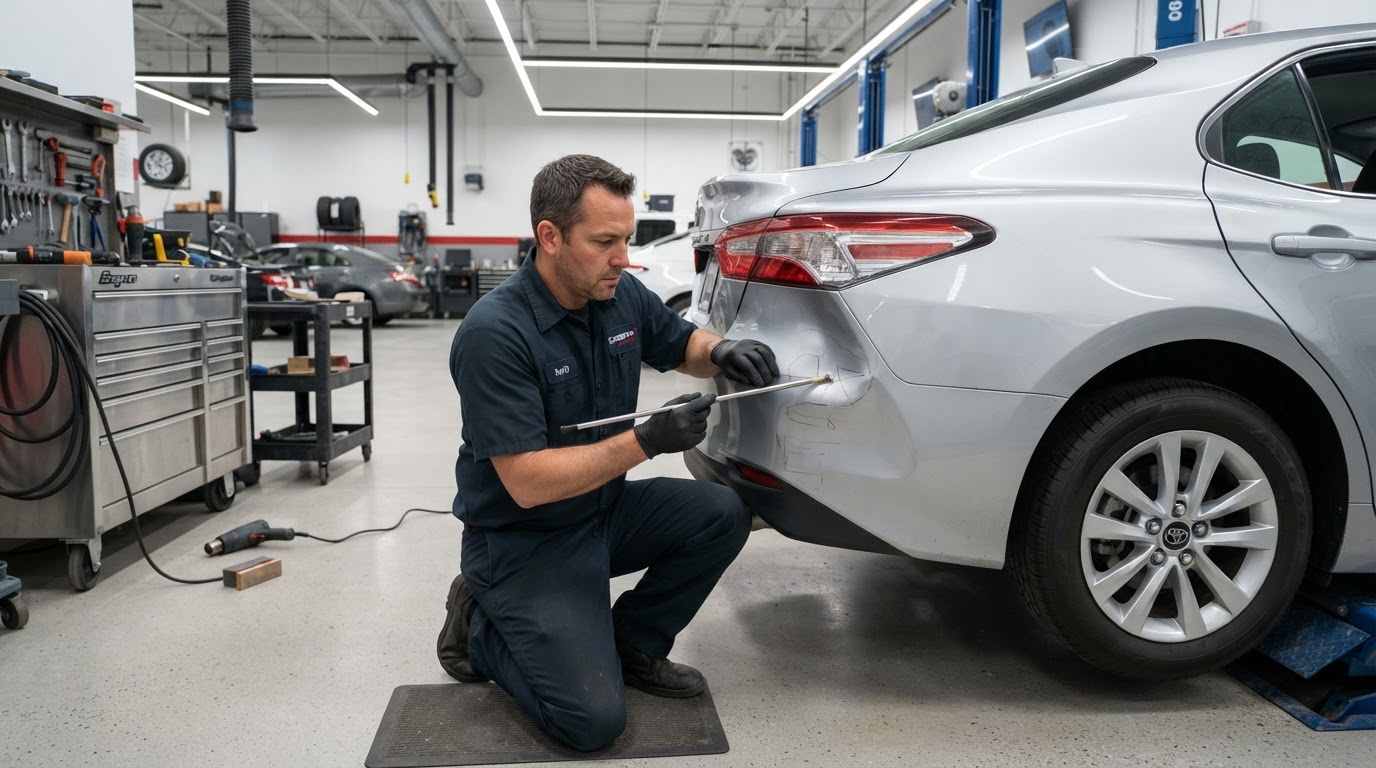
Round, shallow dents with intact paint are the best candidates for paintless dent removal. Sharp creases, stretched metal and dents at panel edges are harder — the metal has been displaced in ways that may not return to shape without conventional repair.
Parking lot dings vs. impact dents
A parking ding is usually cosmetic. An impact dent — from another vehicle, a pole or a low obstacle — can transfer force into brackets, absorbers and sensors. The dent size tells you less than the energy behind it.
Bumper damage is often invisible
Plastic bumper covers can look fine after an impact while the absorber behind them is crushed. Look for uneven gaps to the fender, a cover that sits proud of the body line, or sensors that trigger warnings — those point to damage behind the skin.
Why early repair matters
Cracked paint over a dent lets moisture reach bare metal and start corrosion. On plastic parts, a cracked cover can spread with temperature changes. Fixing damage early is almost always cheaper than fixing it after it worsens.
Getting an honest assessment
A good shop inspects the dent from behind the panel where possible, checks the paint, and tells you plainly whether PDR, conventional repair or replacement is the right option — and why.
Need dent & bumper repair in West Park?
Cannan Family Collision inspects, documents and repairs — with a written estimate you can share with your insurer.