
Why structural damage matters
The frame and unibody are the skeleton of your vehicle. If they are bent, the car can pull to one side, wear tires unevenly, and — most importantly — may not protect occupants the way it was designed to in a future collision. Structural damage can exist even when the outer panels look repairable, and it can be invisible to the eye. A parking-lot impact that seems cosmetic can shift a radiator support or bend an absorber mounting point. A more significant collision can twist the unibody rails or displace the crush zones. Only precise measurement can identify structural damage, which is why a structural damage and body straightening assessment uses factory dimension data rather than visual judgment.
Measurement before metal
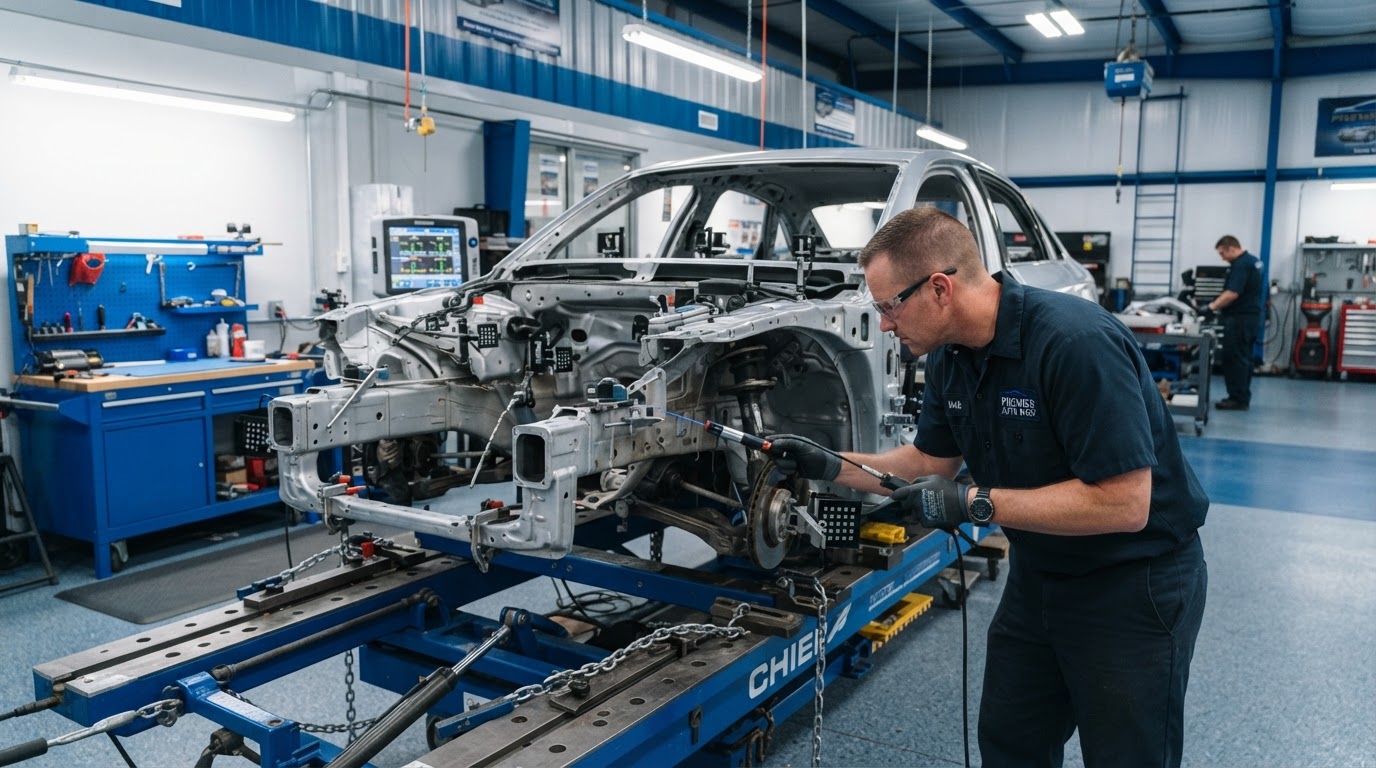
We measure the structure against factory specifications before any pulling begins. That tells us exactly what is out of position and gives us a target to restore, rather than guessing by eye. Modern measuring systems compare key points on the vehicle to the manufacturer's dimension data, producing a map of the damage — which points are high, low, or displaced sideways. This measurement happens before any metal is touched, and it guides every step of the straightening process. Without it, a shop is guessing. With it, the repair plan is based on facts. If the initial inspection during collision and auto body repair reveals potential structural concerns, the measurement step confirms or rules them out before work begins.
Straightening to specification
Using controlled pulling and measured checkpoints, we bring the structure back within manufacturer tolerance. Structural sections that cannot be safely straightened are replaced and bonded or welded per the manufacturer's procedures. The key is controlled force — never over-pulling, which can stretch or weaken high-strength steel. Each pull is measured against the target readings, and the process continues until every point is within specification. Some sections, particularly high-strength steel components in crush zones, are designed by the manufacturer to be replaced rather than straightened. We follow those procedures exactly. Heating or over-pulling a section that should be replaced can compromise its integrity and the vehicle's crash performance.
Verification and documentation
After repair we re-measure and document the final readings. You receive a clear summary of what was corrected, so you can drive away knowing the structure is sound. The before-and-after measurements show that the repair was done to specification — not just that the panels look straight. This documentation protects your vehicle's value by demonstrating that the structural repair was performed correctly. If the repair also involved panel alignment and damaged parts replacement, the final verification includes panel fit, gap consistency, and functional checks alongside the structural readings.
Is it safe to drive with suspected structural damage?
No. A vehicle with a bent frame or unibody can pull to one side, wear tires unevenly, and may not protect occupants in a future collision. If you suspect structural damage after an accident — whether the steering feels off, the vehicle sits unevenly, or warning lights appear on the dash — have the vehicle towed rather than driven. Driving on a damaged structure can cause secondary damage to suspension, tires, and drivetrain components that were not damaged in the original collision, turning a repairable vehicle into a much larger and more expensive repair. When in doubt, arrange a tow. The cost of a tow is always less than the cost of secondary damage.
What to expect during structural repair
Structural repair takes longer than cosmetic work because it involves teardown, measurement, pulling, section replacement, and then all the body, paint, and reassembly work on top. We provide a realistic time estimate with your written estimate and keep you updated if the timeline changes. The process is methodical: measure, pull, re-measure, adjust, and repeat until the readings are within specification. Only then do we move to bodywork and refinishing. To start the process, request an assessment and we will inspect your vehicle and explain what the structure needs.
Frequently Asked Questions
How long does structural damage & body straightening take?
It depends on the extent of the damage and parts availability. We give you a time estimate with your written estimate and keep you updated if anything changes.
Do you work with insurance?
Yes. We prepare written estimates and photo documentation you can share with your adjuster, and you always have the right to choose your repair shop.
Can I get an estimate before committing?
Absolutely. Every repair starts with a thorough inspection and a written estimate — no obligation, no pressure.
Will the repair be visible?
Our goal is an invisible repair: matched paint, blended transitions and even panel gaps. We inspect the work with you before pickup.
Where are you located?
We're at 2201 SW 58th Terrace, West Park, FL 33023, with on-site parking for customers.
Do you service my make of vehicle?
We service most domestic and import makes. Check our Vehicles We Service & Repair section on the homepage, or contact us to confirm.
What should I bring to my assessment?
Bring your vehicle, photos of the damage if you have them, and your insurance claim number if you plan to file. The assessment is no-obligation.
Can I drive my car after the damage?
Only if it is safe to do so. If the vehicle pulls, leaks fluid, shows warning lights, or sits unevenly, arrange a tow instead of driving it.
Helpful Resources
Understanding Structural Damage After a Collision
The frame and unibody are your vehicle's skeleton. Here is how damage to them is found — and why it matters more than how the car looks.
Structural Repair: What to Consider
From measurement to final verification — the questions to ask before structural work begins on your vehicle.
Preparing for Structural Repair
Structural repair takes longer than cosmetic work. Here is how to plan for it — from authorization to pickup.
Request This Service
Cannan Family Collision — 2201 SW 58th Terrace, West Park, FL 33023
Request Assessment Get Directions