
Repair or replace the section?
Modern vehicles mix steels and aluminum, and some structural sections are designed to be replaced rather than straightened. The manufacturer's position statements guide this decision — heating or over-pulling certain high-strength steels can compromise them.
Measurement comes before pulling
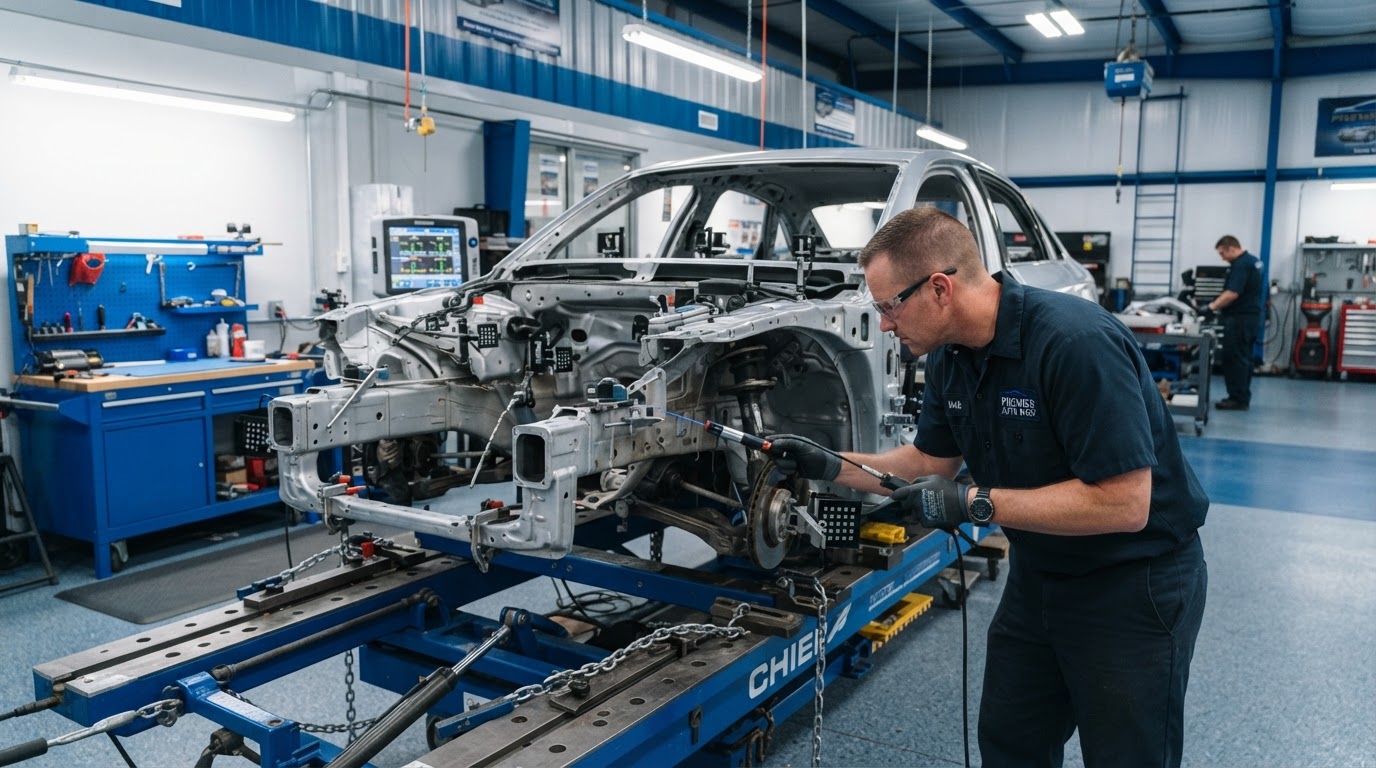
No pulling should begin until the structure is measured against factory data. The measurements define the target: how far, in which direction, and when to stop. Repairing structure without measurement is guesswork.
Controlled, incremental straightening
Proper straightening applies measured force in small increments, re-measuring between each. The goal is to bring every checkpoint back within tolerance — not to force the metal until it looks right.
Corrosion protection and bonding
Where structural sections are replaced or welded, the joints must be sealed and protected against corrosion, and bonding or welding must follow the manufacturer's procedures. This hidden work is what makes the repair last.
Documentation you should receive
Ask for before-and-after measurements and a summary of what was corrected. A shop that documents its structural work is showing you the evidence that the repair was done to specification.
Need structural damage & body straightening in West Park?
Cannan Family Collision inspects, documents and repairs — with a written estimate you can share with your insurer.