
The layers of your paint
Automotive paint is a stack: clear coat on top, then color (base coat), then primer, then the metal or plastic substrate. Each layer is a different repair problem, and the depth of the scratch determines which layers are involved.
Clear-coat scratches
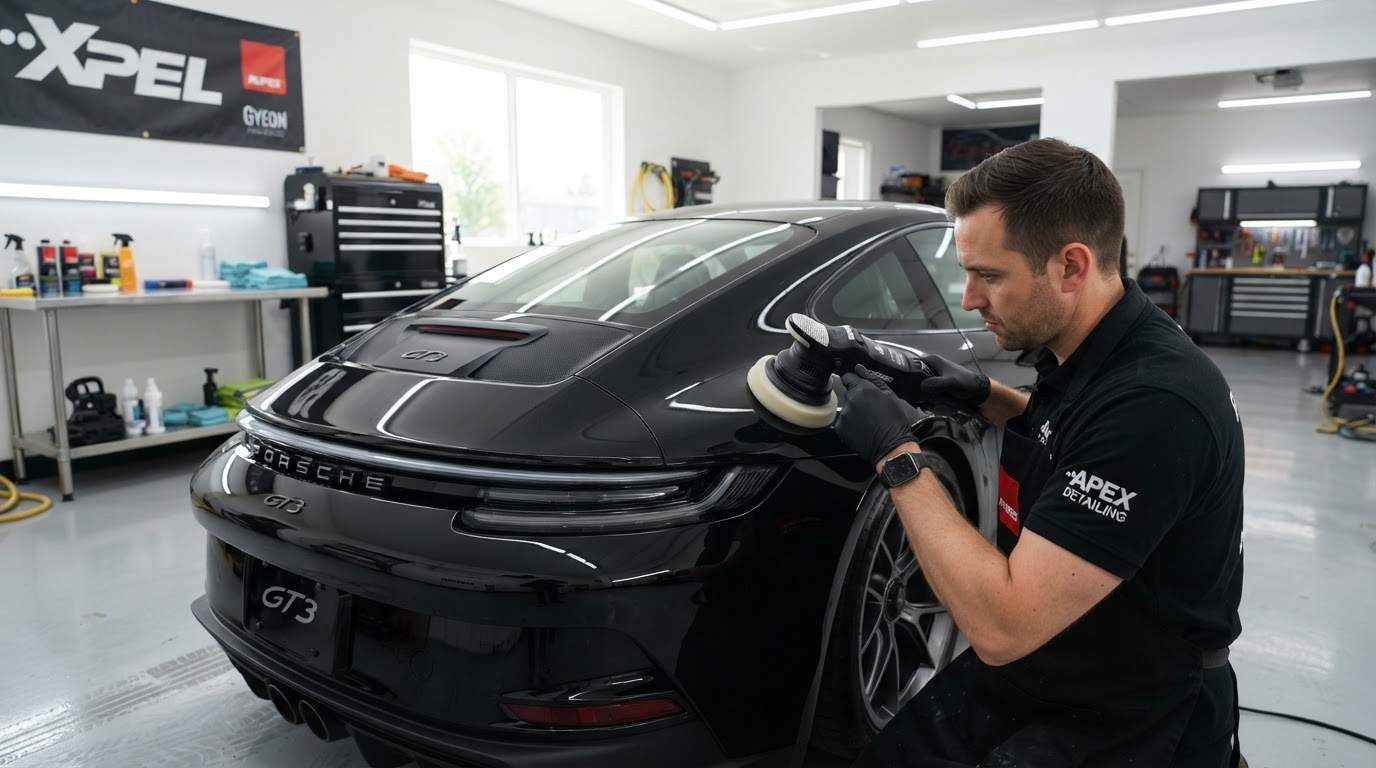
If a fingernail dragged across the mark does not catch, the scratch is likely in the clear coat only. These are usually corrected with machine polishing and compounding — no paint needed, and the factory finish is preserved.
Base-coat and primer scratches
A mark that catches a fingernail and looks white, gray or a different color has broken through the clear into the base or primer. These need sanding, spot repair or repainting — polishing alone will not restore them.
Bare metal and rust risk
Scratches that expose bare metal need prompt attention. Moisture reaches the steel and corrosion begins within days, especially in humid climates. A spot repair now prevents a growing rust problem later.
Transfer marks vs. real scratches
Paint transfer from another object can look like a deep scratch but sit entirely on the surface. A shop can often remove transfer marks with polish, saving you a repaint — which is why an honest assessment matters before any work begins.
Need scratch repair, polishing & finishing in West Park?
Cannan Family Collision inspects, documents and repairs — with a written estimate you can share with your insurer.