
Preparation is most of the job
The visible paint is only the last layer. Beneath it are sanding, degreasing, primer and sealer. Skipping or rushing any of these steps shows up later as fisheyes, peeling or adhesion failure. Ask how the surface will be prepared — the answer tells you a lot about the shop.
The paint environment matters
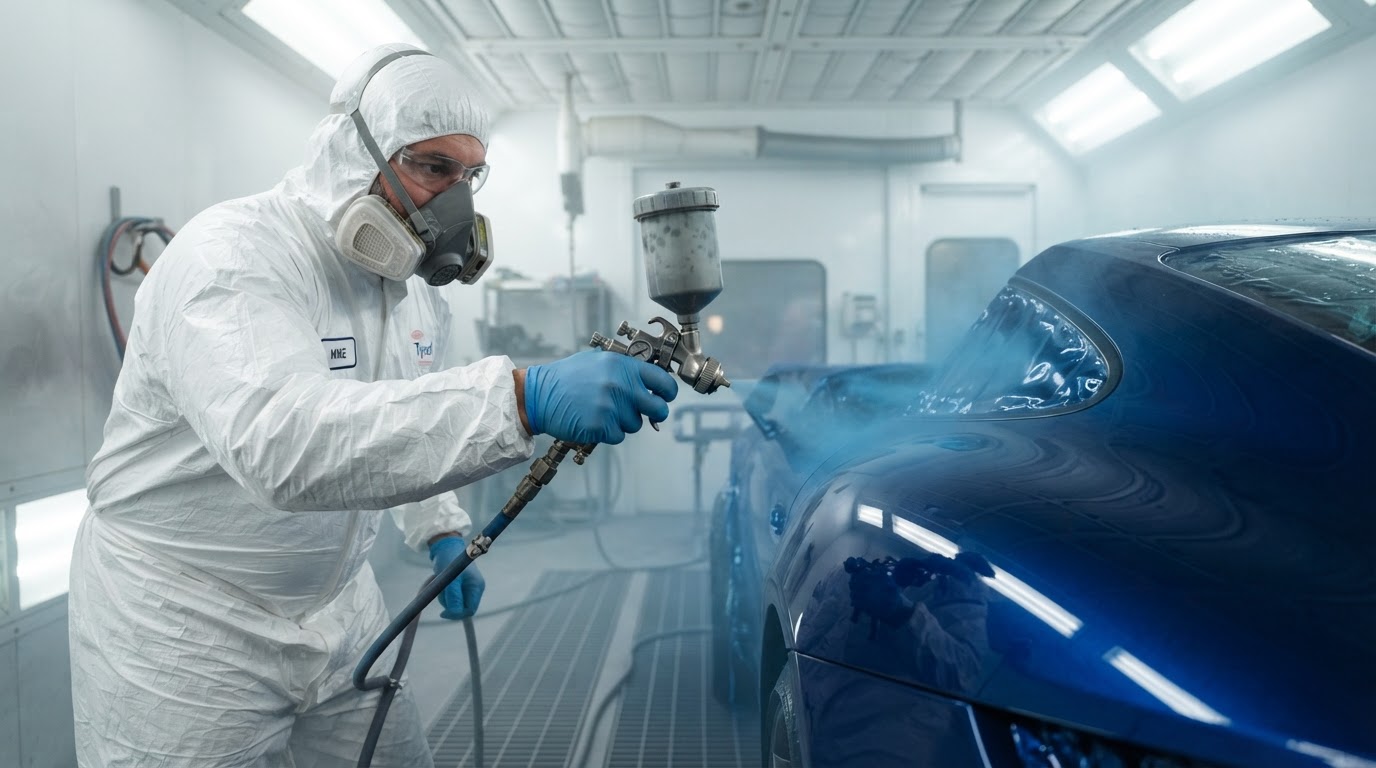
Dust, humidity and temperature ruin finishes. Professional refinishing happens in a downdraft spray booth with filtered air and controlled temperature. A driveway or open-bay paint job cannot control contamination, and it shows in the final texture.
Materials and systems
Quality shops use a complete system from one manufacturer — primer, base, clear and hardeners designed to work together. Mixing systems can cause compatibility problems that appear months later as dulling or cracking.
Curing and handling
Paint needs time to cure before it reaches full hardness. Baking in a booth accelerates it, but even then, fresh paint should be treated gently: no washing with harsh chemicals, no waxing, and no covering with tape or plastic for the period the shop specifies.
Matching the whole vehicle's condition
On older vehicles, a brand-new glossy panel next to faded original paint can look mismatched even when the color is perfect. Sometimes the right answer is polishing the surrounding panels so the whole car reads as one finish.
Need automotive painting & color matching in West Park?
Cannan Family Collision inspects, documents and repairs — with a written estimate you can share with your insurer.